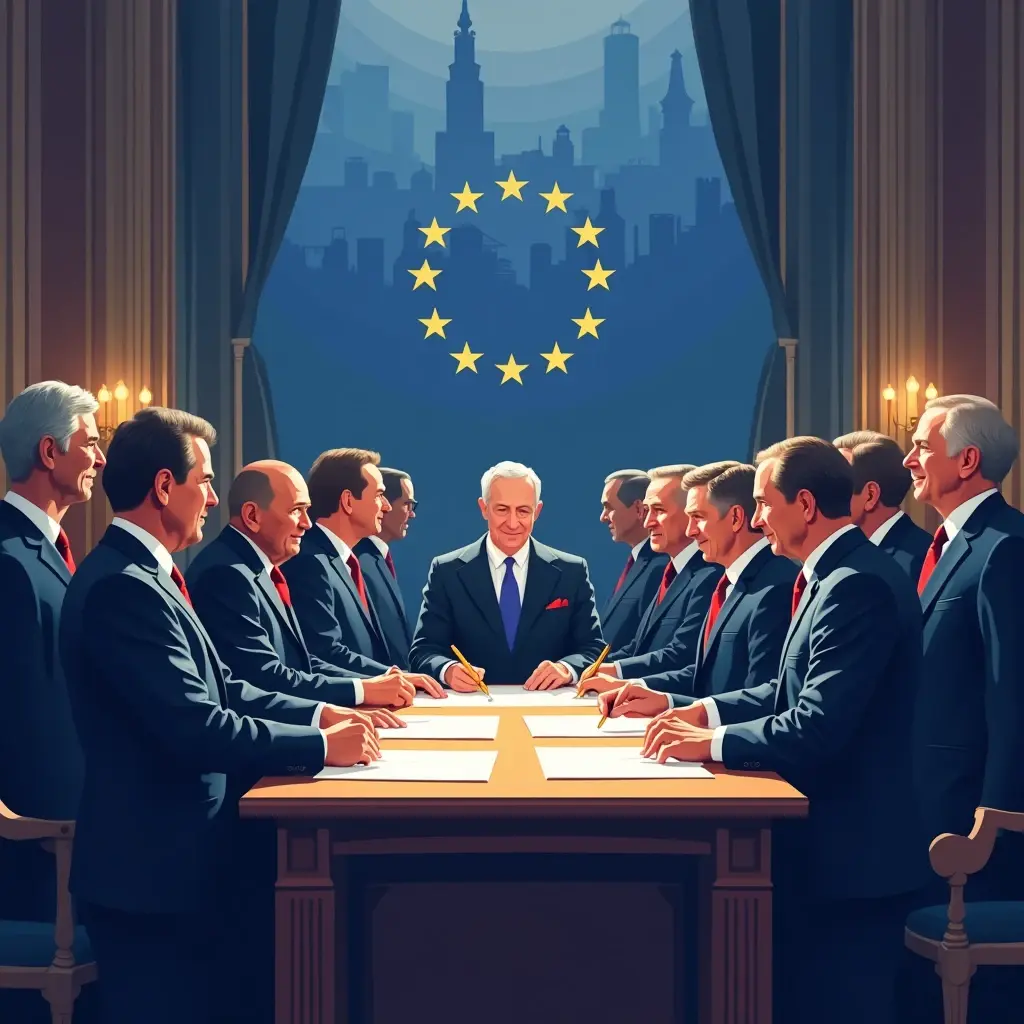
On February 7, 1992, the Maastricht Treaty was signed in Maastricht, Netherlands, marking a landmark moment in European history. This pivotal treaty officially came into effect on November 1, 1993, setting into motion a series of transformative changes. It laid the foundation for the European Union (EU) and significantly advanced the process of European integration by uniting various nations under a common framework for political, economic, and social cooperation.
Significance
The Maastricht Treaty represents a dual-impact milestone:
- Pivotal Moment in European History: It not only reshaped the political landscape of Europe but also redefined the relationships between European nations.
- Catalyst for Integration: By fostering deeper political, economic, and social integration, the treaty became a model of how nations can learn from one another and work collaboratively for a more united future.
This transformative approach has since inspired continuous efforts to build a more cohesive and cooperative Europe. For additional insights into this historic event, refer to the Britannica overview.
Signing and Purpose of the Maastricht Treaty
Signing Details
The treaty, formally known as the Treaty on European Union, was signed on February 7, 1992 in Maastricht, marking a definitive moment in the evolution of European governance. It officially came into force on November 1, 1993, as documented by Britannica. This marked not just the signing of an agreement but the beginning of a new era in European cooperation.
Purpose and Vision
The primary aim of the Maastricht Treaty was to herald “a new stage in the process of European integration” as noted by Investopedia. Beyond merely consolidating economic ties under the European Economic Community (EEC), the treaty expanded the scope of integration to include political and social dimensions. Its vision was to foster a more unified Europe by:
- Enhancing Political Cooperation: Creating a framework for collective decision-making and a shared foreign policy.
- Strengthening Economic Ties: Laying the groundwork for the Economic and Monetary Union (EMU) and ultimately the introduction of the euro.
- Advancing Social Integration: Promoting common standards in areas such as citizens’ rights and justice, ultimately leading to the establishment of EU citizenship.
This comprehensive vision not only broadened the horizons of European cooperation but also set a precedent for future initiatives aimed at deepening regional integration.
Creation of the European Union
Transformation from the EEC
The Maastricht Treaty marked a fundamental shift in European integration by redefining the European Economic Community (EEC). With its signing on February 7, 1992, the treaty changed the name of the EEC to the European Community (EC), setting the stage for the evolution into the European Union (EU). This transformation was not merely nominal; it reflected a broader vision of a unified Europe where economic cooperation expanded into the political and social realms. Learn more about this pivotal change in Britannica’s overview.
Broader Integration
Beyond renaming, the Maastricht Treaty expanded integration to embrace a multidimensional approach:
- Political Integration: Establishing common foreign policy stances and shared values.
- Social Integration: Creating frameworks for social policies that benefit citizens across national borders.
- Economic Integration: Laying the groundwork for a common currency and economic policies that would later lead to the introduction of the euro.
Additionally, the treaty introduced EU citizenship, granting individuals the right to vote and run in European elections regardless of their country of origin. This broadened sense of belonging has been vital in fostering a shared European identity. These measures collectively illustrate how the Maastricht Treaty went far beyond mere economic coordination to create a more unified and cooperative Europe.
Pillars of the EU Under the Maastricht Treaty
Three Main Pillars
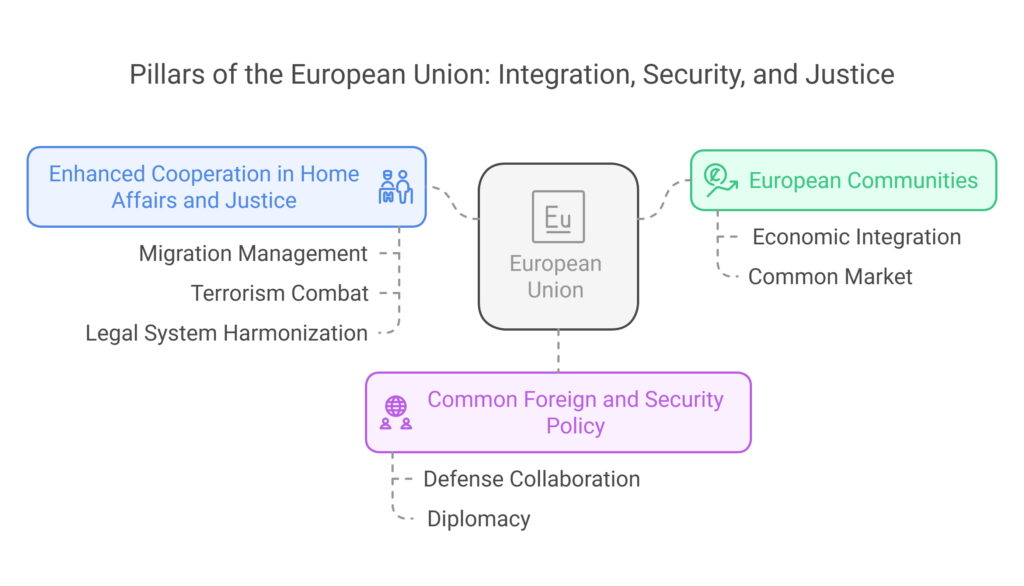
The Maastricht Treaty structured European integration around three core pillars that together formed the backbone of the EU’s multidimensional framework:
- European Communities
This pillar covers economic, social, and environmental policies. It established the mechanisms for creating a single market and harmonizing laws across member states, ensuring a level playing field for economic and social development. - Common Foreign and Security Policy (CFSP)
The CFSP pillar was designed to strengthen collective foreign policy and enhance security cooperation among European nations. It enabled member states to speak with a unified voice on international matters and address global challenges more effectively. - Enhanced Cooperation in Home Affairs and Justice
This pillar focuses on domestic policies, including issues related to asylum, immigration, and judicial cooperation. It fosters greater collaboration in areas of law enforcement, internal security, and the administration of justice, thereby ensuring that the Union remains cohesive on the inside.
Explanation of Each Pillar
- European Communities:
This pillar is the engine of the EU’s economic integration, facilitating the development of a common market and unified regulatory framework. It has been essential for driving growth, innovation, and sustainable development across Europe. - Common Foreign and Security Policy (CFSP):
By providing a coordinated approach to international relations, the CFSP pillar has enabled the EU to project influence on the global stage. It ensures that member states can collaborate on defense and diplomacy, strengthening the Union’s overall security and political clout. - Enhanced Cooperation in Home Affairs and Justice:
This pillar has helped member states work together on internal challenges, such as managing migration, combating terrorism, and harmonizing legal systems. Its emphasis on justice and home affairs underscores the commitment to protect citizens and uphold the rule of law within the Union.
For additional insights into the importance of these pillars, refer to the European Parliament’s discussion on the Maastricht Treaty.
Key Provisions of the Maastricht Treaty
EU Citizenship
The Maastricht Treaty established EU citizenship, a groundbreaking provision that granted citizens of member states the right to vote and run for office in local and European Parliament elections regardless of their national citizenship. This provision not only enhanced democratic participation but also fostered a sense of shared identity and unity among Europeans. For further details on this transformative change, refer to Britannica’s overview.
Economic and Monetary Union (EMU)
Another cornerstone of the treaty was its commitment to an Economic and Monetary Union (EMU). The treaty formalized plans for a common currency—the euro—and set up the framework for a monetary union managed by common institutions. This move aimed to harmonize economic policies among member states, promote fiscal discipline, and enhance the EU’s global competitiveness.
Convergence Criteria
To ensure a smooth transition to a common currency, the Maastricht Treaty defined convergence criteria. These criteria required member states to meet specific economic benchmarks, including limits on the budget deficit, public debt, inflation rates, and the need for exchange-rate stability. These measures were designed to ensure that only countries with sound economic policies and stable financial conditions could adopt the euro. More detailed information can be found in the Wikipedia article on the Maastricht Treaty.
Road to Ratification
Approval Process
The ratification of the Maastricht Treaty was a complex and politically charged process. It required approval from voters in each member country, reflecting the treaty’s profound implications for national sovereignty and European integration. This rigorous approval process highlighted the importance of broad consensus and the democratic legitimacy of such a transformative agreement.
Country-Specific Challenges
The path to ratification was marked by several notable challenges unique to different member states:
- Denmark’s Rejection and Subsequent Approval: In June 1992, Denmark initially rejected the treaty in a national referendum. However, after negotiations and significant revisions, the treaty was eventually approved by Danish voters in May 1993.
- France’s Narrow Approval: The treaty’s approval in France was contentious and closely contested, with the government securing a narrow victory in September 1992 amid intense public and political debate.
- British Vote of Confidence: In the United Kingdom, Prime Minister John Major had to call a vote of confidence in July 1993 to ensure the treaty’s passage, underscoring the deep divisions and concerns regarding the treaty’s impact on national sovereignty. For a detailed look at these challenges, refer to Consilium.europa.eu.
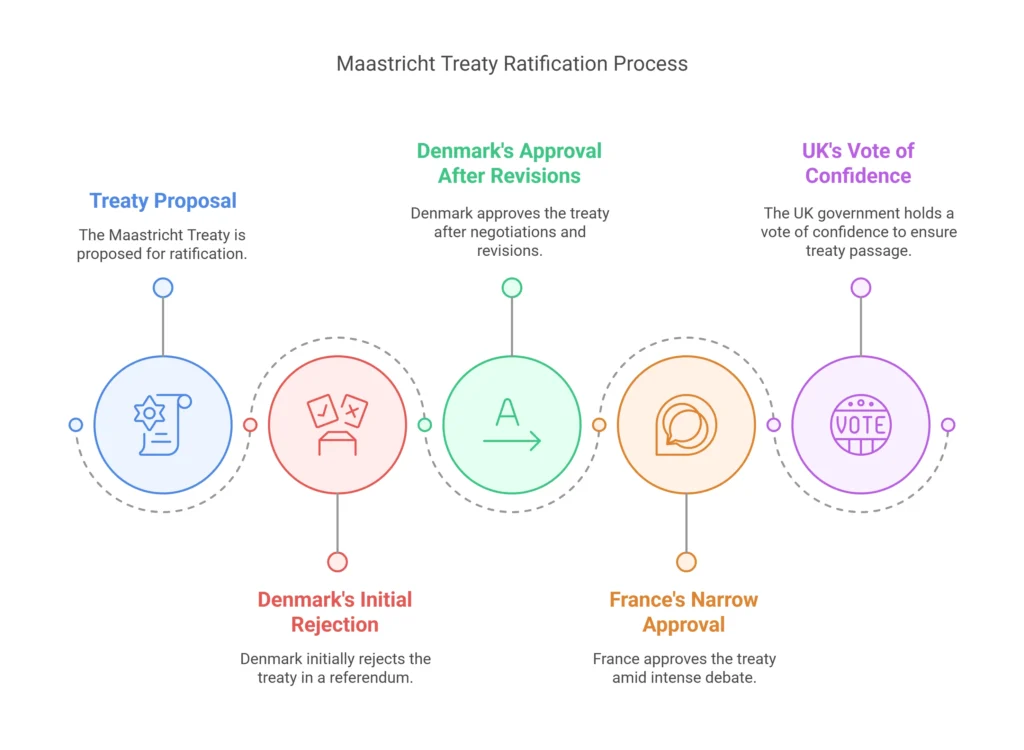
These country-specific hurdles underscore the complexity of European integration, where balancing national interests with a unified European vision required careful negotiation and significant political compromise.
Impact and Legacy
Long-Term Impact on European Integration
The Maastricht Treaty laid the cornerstone for the modern European Union (EU) by expanding its scope and capabilities. By moving beyond mere economic cooperation, the treaty fostered an environment for political and social integration, creating a more unified Europe. This broad-based integration has been crucial in shaping the EU’s ability to address global challenges collaboratively. For further details on this expansion of integration, see EUR-Lex.
Establishment of the Euro
One of the treaty’s most transformative achievements was its role in creating the framework for the Economic and Monetary Union (EMU). This framework set the stage for the introduction of the euro as a common currency, which was designed to strengthen economic ties and promote stability among member states. The common currency has since become a symbol of European unity and economic progress.
Ongoing Amendments and Reforms
The dynamic nature of the Maastricht Treaty is evident in its ability to evolve over time. The treaty has been amended several times to address evolving challenges and priorities, reflecting its lasting adaptability and influence. These amendments ensure that the EU remains responsive to new economic, political, and social realities, securing its role as a robust institution in a changing global landscape.
Cultural and Political Legacy
Beyond its economic and structural achievements, the Maastricht Treaty has left a profound cultural and political legacy. It has contributed significantly to greater political cohesion, economic stability, and the development of a shared European identity among member nations. By uniting diverse countries under common values and goals, the treaty has fostered an environment where cooperation and mutual understanding can flourish. For a deeper exploration of this legacy, refer to CVCE.eu.
Conclusion
Recap of Key Points
The Maastricht Treaty is a landmark agreement that has reshaped European integration. It established the European Union, introduced EU citizenship, laid the foundation for the Economic and Monetary Union (and the euro), and defined convergence criteria to ensure economic stability. Its ratification, despite numerous challenges, marked a turning point in European history and set the stage for deeper political, social, and economic cooperation across the continent.
Reflection
The treaty not only redefined how European nations interact but also set a powerful precedent for international cooperation. Its comprehensive approach—merging economic integration with political and social dimensions—has helped create a more resilient and unified Europe. Readers are encouraged to reflect on how the lessons from the Maastricht Treaty continue to influence modern governance and global collaboration.
Final Thoughts
The legacy of the Maastricht Treaty endures as a testament to the transformative power of unity and collaboration. It has paved the way for sustained peace, unity, and progress among European nations and remains a guiding framework for addressing new challenges in an ever-evolving world. As Europe moves forward, the spirit of Maastricht continues to inspire efforts toward a more integrated, democratic, and prosperous future.
For more insights into the lasting impact of the Maastricht Treaty, explore the comprehensive resources available on Britannica and European Parliament.